
👁️ The Cybernetic Disease
One impulse explains the last 50 years: Command, Control, Extract.

The future is unknowable.
It’s one of the fundamental tragedies of human existence, a corrolary to our movement into a future that ends in death. Our putative leaders today - at least those functionally in charge of the economy - have dedicated their lives, and your money, to fighting these fundamental truths.
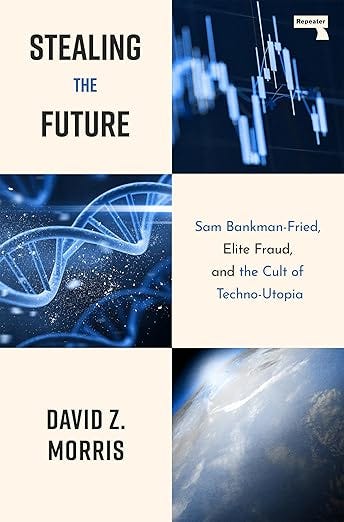
They fight death, as I argue in Stealing the Future, substantially out of individual psychological trauma, from Ray Kurzweil’s longing to resurrect his own father to Eliezer Yudkowsky’s early tragic loss of a brother. Immortality is also the quest of those who fail to understand or accept the interdependent and continuous nature of human species-being, like Peter Thiel, grasping for a fully individualized transcendence of the cycle of Samsara.
I follow Baudrillard in calling this “The Logic of the Code,” one based on symbolic reduction and universal fungibility. The movement of money in markets melts all action into data that feeds its projections of the future into the control scheme - a mechanism test-run with social media and now poised to be vastly expanded in the AI-sphere.
But they are also the product of a clear historical process that has nothing to do with individual psychology or trauma: the process of cyberneticization.
Though rooted in the demands of war technology, cyberneticization became a much broader process of intensifying data gathering about the world, and especially about people’s behavior, for the purposes above all of economic management. In one dimension, it becomes the support and scaffolding for what is deceptively termed “the free market,” the process of measuring that helps plan production under neoliberalism.
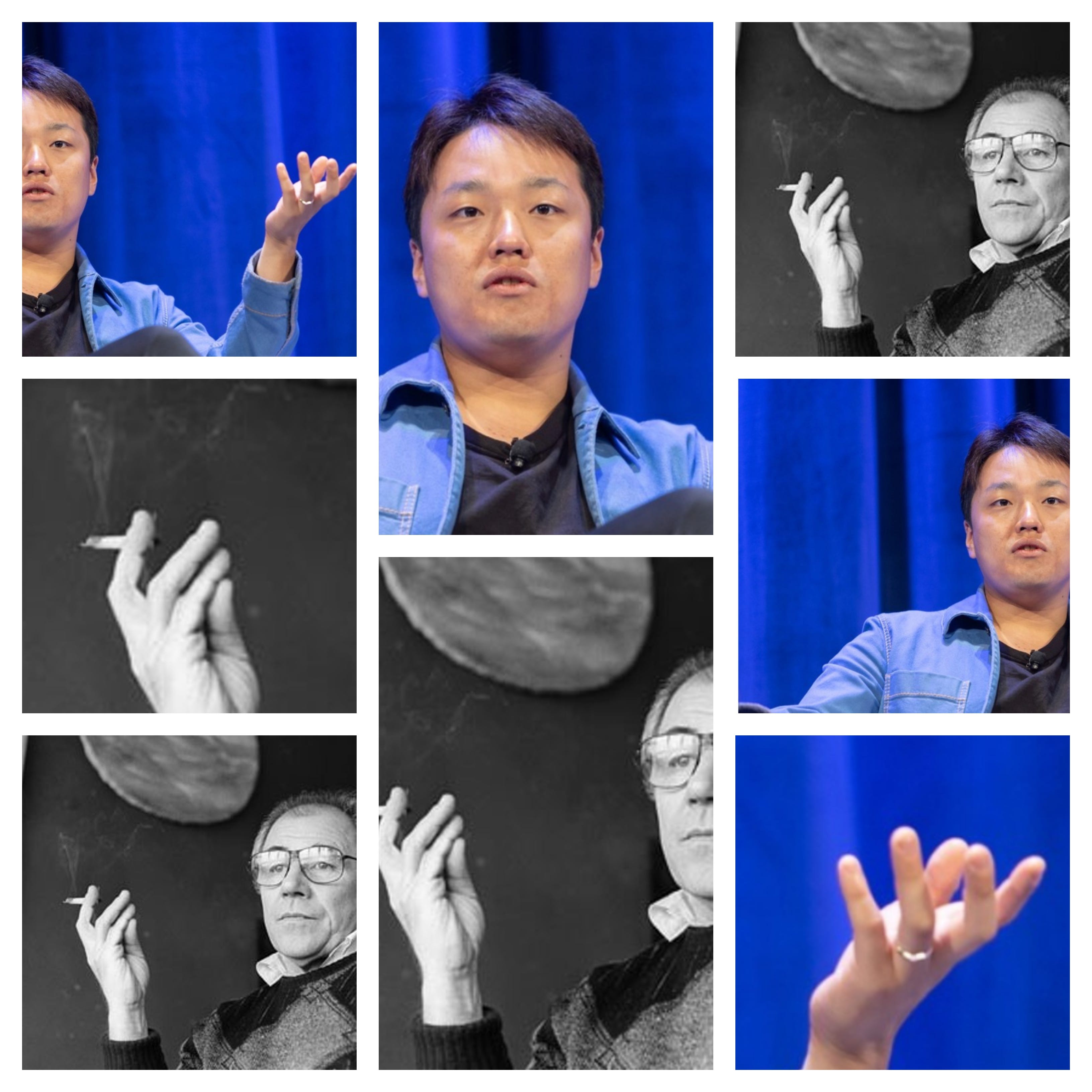
This is a fundamental bait-and-switch, very much like Do Kwon’s Luna: we are told that the “invisible hand” of supply and demand directs the distribution of goods, or stabilizes a synthetic dollar thanks to arbitrage.
But just as Do Kwon relied on Jump trading to actually prop up his fake free-market dollar, supply and demand themselves must be managed through the cybernetic info-harness to produce the “free float” of prices and production we experience as The Market.
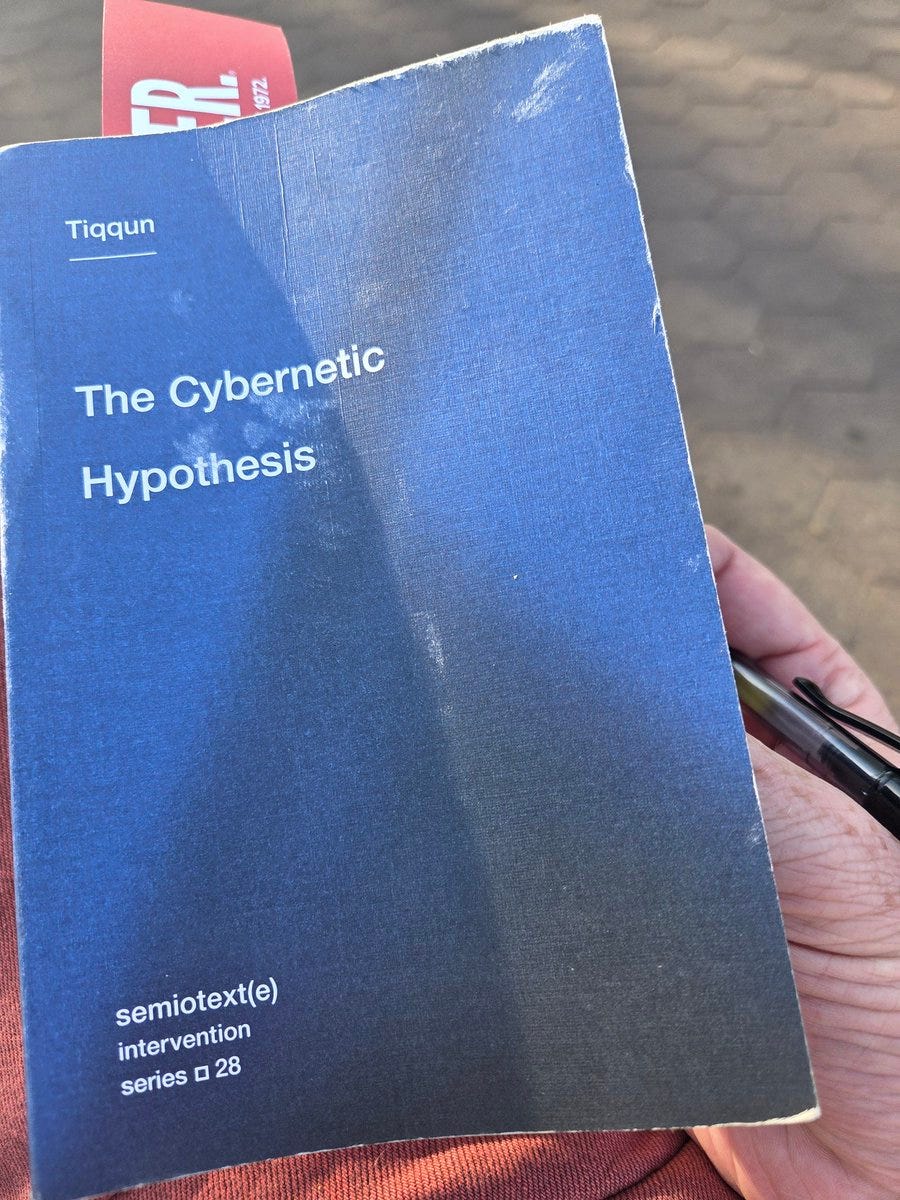
If you read philosophy, you will constantly be surprised by how far ahead of the curve on social forces some people can be. That is certainly the experience of reading The Cybernetic Hypothesis, released all the way back in 2001 by the collective Tiqqun. (Members of the collective would go on to author The Coming Insurrection as The Invisible Committee.)


The Cybernetic Hypothesis is staggeringly perceptive, frequently feeling as if it is making impossible predictions of the future we live in 20 years later.
What follows isn’t a review or even a summary, but a cherry-picking and explication of a few of the points where their insights cast light on the finance matters that I focus on here.

“It’s conceivable that a society taken as a whole, a State, could be regulated in such a way that it is protected form all future accidents: such that in itself only eternity changes it. This is the ideal of a stable society achieved through objectively controllable social mechanisms.” - Abraham Moles, quoted by Tiqqun.
This is the cybernetic hypothesis itself summarized by one of its ideologues. Command and control at the social level, primarily through the gathering of behavioral data, towards the goal of complete stasis - or what Freud would call the death drive.
Tiqqun later describe this as “the shared fantasy of the Universal Automaton, analogous to Hobbes’ fantasy of the State in Leviathan, ‘artificial man.’”
The cybernetic hypothesis is now the most substantial anti-humanism, one that is determined to maintain the general order of things while priding itself on having gone beyond the human.
My colleague Emille Torres frequently describes elements of the TESCREAL movement as “extinctionist,” but the willingness to literally sacrifice humans is only the most extreme manifestation of its hatred for the merely human. Data is meant to eliminate (that is, not measure) the irrelevancies of the human, the details that don’t matter, the unpredictable variation that averages out at population level. In the specific or unique, the cybernetician has no interest.
It is difficult not to personalize this, in a way perhaps petty but nonetheless both effective and revealing: figures from Sam Altman to Eliezer Yudkowsky to Dario Amodei do not seem entirely comfortable being humans.
It is little surprise that their lives’ work is to eliminate that uncomfortable experience.

The new conquerors, whom we will call cyberneticians here, don’t form an organized party … but a diffuse constellation of agents, motivated, possessed, blinded by the same fable.
This is why I called Stealing the Future a work of forensic philosophy. The conspiracy between figures as disparate as Will MacAskill and Peter Thiel is not organized by anything so crude as a shared political agenda, but by a deeper ideology of economic command and control that even the conspirators themselves are barely aware of.
The cybernetic hypothesis calls for a radically new structuring of the individual or collective subject, in the direction of hollowing-out. It dismisses interiority as a myth and along with it the entire psychology of the 19th century, including psychoanalysis.
The rejection of psychoanalysis - specifically, the rejection of the entire idea of subconscious drives or hidden motives - is visible everywhere in the current operationalized tech-world version of the Cybernetic program. Barbara Fried’s brand of die-hard determinism is a necessary corrolary to the pretense of prediction and measurement. The most hilarious example is of course Yudkowskyite Rationalism, which takes the “elimination of bias” as a process of building better processes, rather than involving any acknowledgment or grappling with the internal contradictions of the acts of knowing or believing.
As Heidegger put it, “the human being is still considered a source of irritation” to the cybernetic project, because of its unpredictability. And so, as these simplistic people tend to, they simply think human freedom and internal conflict out of existence and proceed from its absence.

“The obsession with risk is the flip side of this accumulation of data … which explains the current hypertrophy of security operations and functions - preiction, surveillance, repression, incarceration …”
There are few clearer places to see the connections between Effective Altruism/Rationalism and the logic of militaristic risk-planning than in their shared belief that sufficient data leads to clear predictions about the future. In Stealing the Future, I recount Kenneth Arrow’s WWII-era anecdote about generals demanding weather forecasts even if they were known to be useless, and this fetishization of data against knowledge is the root of the self-stupification seen in the bad choices of someone like Sam Bankman-Fried.
The cybernetic hypothesis answers, in the natural sciences and social sciences alike, to a desire for order and certainty.
This pathological desire for total control can be seen in both the individual quest for immortality, and in theoretical fantasia’s like Toby Ord’s desire to predict and somehow prevent exceedingly unlikely asteroid strikes on the planet Earth. The goal is to eliminate all unknowns. But again as with Arrow’s generals, this lust for complete surveillance and data leads inevitably to shortcuts - because again, we cannot predict the future.
The cybernetician may point to indicative data, but this data is never complete. And having rejected judgment for data, rejecting even human empathy as an indicator of paths of action, the cybernetician is inevitably hung by his own petard, left mute and deranged by the falsehood of the world made of numbers.
The first socio-cyberneticians show that homo economicus could only exist on the condition of total transparency of one’s preferences to oneself and to others. Without the ability to know the whole set of behaviors of the other economic actors, the utilitarian idea of a rationality of micro-economic choices is only a fiction.
That is, a fiction that must constantly be reinforced and re-established. This is the pathway from data metrics to Do Kwon faking his “self-correcting” stablecoin. The mythology of the market’s total balancing powers is in fact buttressed constantly by outside intervention, by active plate-spinning which above all reinforces the fiction of the market’s neutrality, or worst of all its natural inevitability, when in fact it is constantly reinforced by active decisions made from positions of power.
These will suffice for now.
The Cybernetic Man is our ruler now.
He is a hollow, fragile God.
2/2
“
or what Freud would call the death drive.
“
Oh god. Not Freud again. Required reading: https://sciencebasedmedicine.org/freud-was-a-fraud-a-triumph-of-pseudoscience/ I’ve actually conversed with the author, Harriet Hill, on other topics. I trust her review. She used to write for Skeptic magazine (not sure if she does anymore, once Pat Linse passed away, it really went downhill, don’t know how it is now). I know DZM likes to read books, well, perhaps he should read "Freud: The Making of an Illusion" /and/ this review of it. What I like about this review is Harriet Hall writes “Freud’s theories have been widely criticized as unscientific, and treatment of mental disorders has increasingly turned to … effective therapies like cognitive behavioral therapy (CBT).” Per this comment https://davidzmorris.substack.com/p/sam-bankman-fried-the-sickness-unto/comment/111241859 , I believe CBT deserves more love than DZM gives it. I mean, it’s so ironic to me that Freud seems like /exactly/ the type of fraud that DZM is writing a book about, and yet refers to him as a legitimate source. Read the review and tell me if this isn’t almost exactly the stuff DZM says modern fraudsters do. Too much drugs/stimulants “advocacy of cocaine was irrational.” Believes his own lies “Crews says, “He chose to remain deceived even after having been proven wrong.” " Aims for the rich and vulnerable “treated pampered, rich socialites.” Genetic prejudice (like eugenics loving TESCREALists) “women were biologically inferior.” Critics just “didn’t understand it.” Like, how many of DZM’s fraudster boxes does this dude need to tick?!
“
Tiqqun later describe this as “the shared fantasy of the Universal Automaton, analogous to Hobbes’ fantasy of the State in Leviathan, ‘artificial man.’”
“
Um, I know who Hobbes’ is, I know Leviathan is often used to support strong state (and usually that morphs into fascism), but what is “artificial man?” [Spoiler: No definition is given.]
“
Data is meant to eliminate (that is, not measure) the irrelevancies of the human
“
Cool… How? Because I still don’t know what Cyberneticism is.
“
economic command and control
“
Again… What is that?
“
It dismisses interiority as a myth and along with it the entire psychology of the 19th century, including psychoanalysis.
“
Welp, again, the “forefather” of psychoanalysis seems like a total fraud. That doesn’t mean anyone who also thinks this is /not/ a fraud. The aforementioned “Will MacAskill and Peter Thiel” could be frauds too.
“
The rejection of psychoanalysis - specifically, the rejection of the entire idea of subconscious drives or hidden motives
“
Ah, so here’s the meat. Just as frauds can be in psychoanalysis and "movements" that are dismissive of psychoanalysis, so too can one dismiss Freudian psychoanalysis /and/ still believe in “subconscious drives or hidden motives.” For example, CBT. I suggest that CBT is about bringing the subconscious to the forefront. “Oh wow, I am really putting too much weight on everything being bad.” Perhaps it’s a matter of definitions, and you can call CBT a form of psychoanalysis if you look at the root (analysis of psyche) and not the general understanding of psychoanalysis. Fine. But it’s not Freud. And, yeah, people like Andresseen saying (paraphrasing) “I hate introspection” is not the answer https://davidzmorris.substack.com/p/andreessens-ignorance-agenda .
“
hypertrophy of security operations and functions - preiction, surveillance, repression, incarceration
“
Okay, hypertrophy, that means quickly eroding from disuse. Got it. Security operations and functions. Okay, so a lessening of things we do for security. Got it. “preiction” Uh, probably not a typo, whatever that is. “surveillance” Uh… Wait, that’s often a bad thing, but isn’t that “pro” security? “repression, incarceration” … Wait, what? Is this saying it’s against or for security operations and functions?
“
fetishization of data against knowledge is the root of the self-stupification seen in the bad choices of someone like Sam Bankman-Fried.
“
Okay, so I know SBF a) thought (as a kid or young adult, let’s be fair) the writings of Shakespeare were pretty worthless and b) thought you can do a good-enough risk analysis of just about anything and should act accordingly. But it seems to me that SBF thought /certain/ knowledge (humanities) was worthless and /certain/ data (market prices) were important. But what of a book like Adam Smith’s “The Wealth of Nations?” Is that not "knowledge" that SBF would think important? Or data like when certain folios were created of Shakespeare’s work–which is important data if you want to understand Shakespeare’s work and how they evolved over time, but not important if you don’t care about the works at all, which apparently SBF didn’t. So certain knowledge would be important and certain data would be worthless. If so, then these words would need qualifiers. SBF, to me, is a perfect example of how you could use the subconscious to explain his behavior https://en.wikipedia.org/wiki/Cognitive_dissonance –but that’s psychology, not necessarily psychoanalysis.
“
the falsehood of the world made of numbers.
“
Numbers that represent abstracts based on human analysis often being faulty, sure. Numbers underlying the initial conditions of the universe not being essential, eh, not so sure https://en.wikipedia.org/wiki/Fine-tuned_universe . Again, qualifiers needed.
“
the utilitarian idea of a rationality of micro-economic choices is only a fiction.
“
I… guess? This was a sentence emphasized by DZM and I am presuming from the "The Cybernetic Hypothesis." I think what Tiqquun/DZM means is that it is probably impossible to get all the macro knowledge necessary to make utilitarian decisions in the micro that will definitely end up the way the decision makers expect. Which, sure, I can buy. And will probably be true until humanity dies out. Sure. But I'm not even sure this /is/ what it is saying.
“
That is, a fiction that must constantly be reinforced and re-established. This is the pathway from data metrics to Do Kwon faking his “self-correcting” stablecoin.
“
Wait… That’s just fraud. I’m confused again.
“
The mythology of the market’s total balancing powers is in fact buttressed constantly by outside intervention, by active plate-spinning which above all reinforces the fiction of the market’s neutrality, or worst of all its natural inevitability, when in fact it is constantly reinforced by active decisions made from positions of power.
“
Okay, yeah, that I totally agree with. How is that related to cybernetics? I am so confused. Perhaps this substack post needed a preamble like this one by Paul Krugman https://paulkrugman.substack.com/p/europe-versus-america-a-response "A note for most readers: This is inside economics [the word baseball stricken out] football, a discussion mostly among professionals — and covers issues that even economists seem to be perplexed by. You have been warned." And yet... I at least kind of understood that one.
DZM is an excellent writer. I am sure he can make this material more accessible if he knows how perplexing it is to some readers. I hope this comment helps.
1/2
At some point, I just couldn't follow this substack piece and just stopped trying.
To help DZM, here's what were my stumbling blocks.
“
transcendence of the cycle of Samsara.
“
Hmm something about humans needing to die, I bet.
“
Baudrillard
“
Uh oh, every time DZM mentions this person, I know I'm going to be confused soon.
“
universal fungibility
“
Huh, dunno what that is, I’ll click the link. Oh yeah, this https://davidzmorris.substack.com/p/nothing-is-true-everything-is-exchangeable ... Which I didn’t understand last time I came across it either.
“
control scheme
“
Okay, the rest of the sentence has words I understand, but what’s a “control scheme?”
“
process of cyberneticization.
“
Uh, dunno what that is, but my guess is that DZM will define it shortly. [Spoiler: He did not.]
“
economic management
“
Like… Managing the economy? Or, like, being economical (parsimonious) in management? What does this mean?
“
dimension
“
"Dimension" makes me afraid I’ll be entering the hypercube of confusion soon.
“
production under neoliberalism.
“
Oo boy, neoliberalism, one of the terms everyone has a different definition for.
“
much like Do Kwon’s Luna
“
Okay… I know what Do Kwon’s Luna is… But I still don’t know what “cybernetecization” is.
“
cybernetic info-harness
“
What is an info harness? Is it a bridle made of data? Is it a mitt for catching factoids? What?
“
“free float” of prices
“
Like… It’s tradable supply? Huh?
“
If you read philosophy
“
Yep, I’m going to be lost, DZM just mentioned philosophy. I find it ironic that he skewers Bankman-Fried’s philosophy parents as being completely wrongheaded, but I can’t follow DZM’s philosophy arguments half the time.
“
the collective Tiqqun
“
Oh, that link will tell me what that is… Oh… It will not.
“
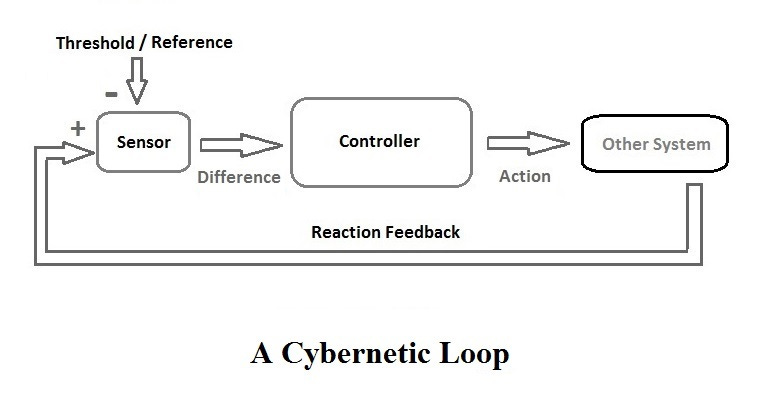
[image of the Cybernetic Loop]
“
I got really confused at decided to checkout the Wikipedia of Cybernetics https://en.wikipedia.org/wiki/Cybernetics by this point. I saw this image there too. /And no explanation what the heck it meant in the beginning of that either./ Sensor? Threshold? Controller? What?
“
This is the cybernetic hypothesis itself summarized by one of its ideologues.
“
Oh, the quote above, which I totally didn’t understand, is a summary of the meaning. I’ll read it again… “It’s conceivable that a society taken as a whole, a State, could be regulated in such a way that it is protected form all future accidents: such that in itself only eternity changes it. This is the ideal of a stable society achieved through objectively controllable social mechanisms.” Yeah, still no f’ing clue.
“
Command and control at the social level
“
Of what? People? Through what? Media? RF waves? What does this mean???